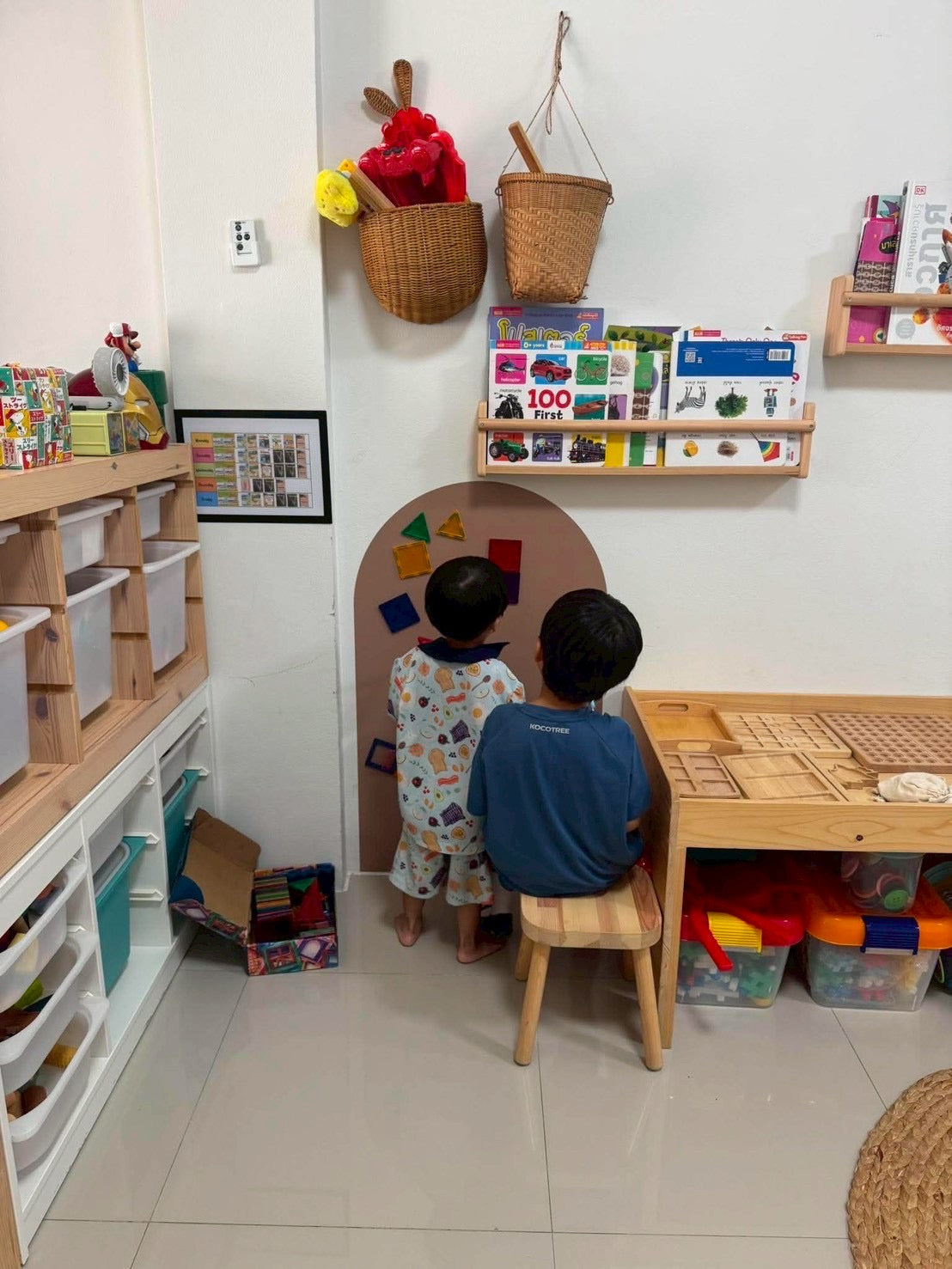
The PlayWall works best on clean, smooth, non-absorbent surfaces — such as flat-painted walls (matte, satin), glass, smooth wood, or doors. Avoid very textured or rough surfaces, freshly painted walls (let them cure for 3 -4 weeks), or walls prone to humidity.
Before You Apply: Wall Surfaces to Avoid
To ensure your decals stay secure and your walls remain intact, it’s essential to know which surfaces aren’t ideal for application.
🚫 Walls That Don’t Work
Specialty & Protective Paints
Some modern paints are designed to repel stains, dirt, or even improve air quality. While great for maintenance, these coatings can prevent decals from bonding properly, resulting in weak or failed adhesion.
Rough or Decorative Surfaces
Walls with heavy texture, uneven finishes, or wallpaper create gaps that stop decals from sticking smoothly. Applying decals on wallpaper is also not recommended, as removal may cause damage.
Aged or Fragile Paintwork
If the paint is peeling, cracked, or already compromised, applying decals may worsen the condition. Adhesion pressure can lift paint from the surface when applied or removed.
About Wall Care & Responsibility
Quick wall test: Take a roll of clear tape and press the rounded edge of the roll firmly against your wall. Stick a strip of tape flat onto the wall about 4 inches long. Leave it for a few hours — if the tape stays in place, your wall is good to go.
Potential for Wall Marks
Applying or removing decals may leave marks or minor damage—especially on flat white or matte-painted walls, which tend to be more delicate.
Our Disclaimer
Because wall quality and paint types are beyond our control, we can’t take responsibility for any surface damage that may occur during installation or removal.